

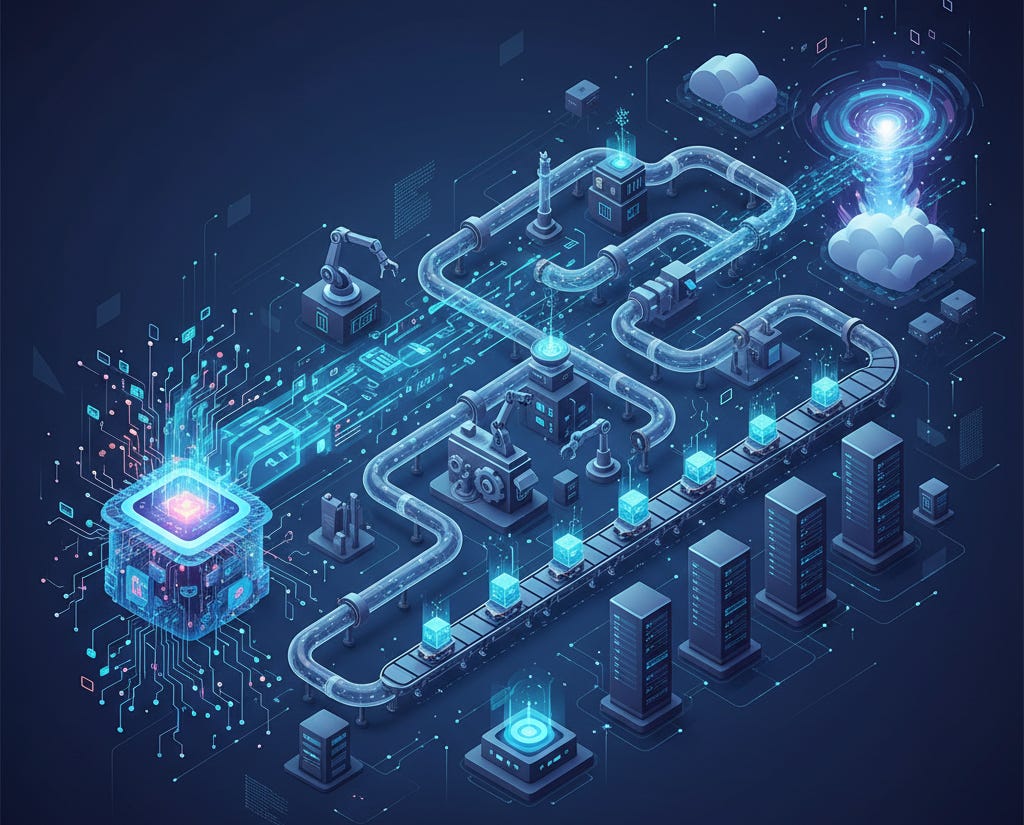
Stripe engineers send Slack messages that automatically become production code. Not suggestions. Not drafts. Production code merged into their main branch, supporting over a trillion dollars in annual payment processing.
Their “Minions” system generates 1,300 pull requests per week with zero human-written code. Fire-and-forget automation from conversation to deployment. While the rest of us debate whether AI can write good code, Stripe has built a software factory that produces enterprise-grade applications at scale.
The software factory isn’t a future concept. It’s a present reality, and it represents the next fundamental challenge for engineering organizations.
What We’re Building at Duetto
I’ve been thinking about this a lot lately. At Duetto, we’re exploring what a software factory could look like for hospitality technology. Not because we want to eliminate developers, but because we’re hitting the limits of traditional development approaches for domain-specific applications.
Our challenge isn’t just writing code—it’s translating complex hotel revenue management requirements into software that works reliably across thousands of properties with different systems, data formats, and business rules. The cognitive load of keeping all these variations in mind while building features is becoming unsustainable.
What if we could describe what we need in something like our APEX specifications, and have the system generate not just code, but complete deployments? Kubernetes instances running Claude Code agents, database migrations, monitoring setup, the whole stack configured for that specific use case.
The goal isn’t replacing our engineering team. Our developers should be solving revenue optimization algorithms and building domain-specific integrations, not configuring YAML files for the hundredth deployment variation.
The Stripe Blueprint
Stripe’s Minions reveal what a production software factory actually looks like when you strip away the hype and focus on what works.
Five-Layer Pipeline: Their system transforms Slack messages into production-ready pull requests through a structured pipeline. Not magic—engineering discipline applied to automation.
Sandboxed Execution: Every agent runs in isolated containers with codebase checkouts. They can’t access production systems, can’t cause cascading failures, can’t break things outside their designated scope. The walls matter more than the model.
Surgical Tool Selection: Their Model Context Protocol provides access to hundreds of internal tools, but agents get intelligently prefetched access to only the ~15 tools relevant to their specific task. Not everything available—the right things available.
One-Shot Optimization: Instead of conversational back-and-forth, their agents are optimized for well-defined work that completes in a single execution. Better latency, lower costs, more predictable outcomes.
The results speak for themselves: 1,300 PRs weekly, zero human-written code in merged changes, supporting their entire payment infrastructure. This isn’t a pilot program. This is their production development workflow.
The Broader Software Factory Landscape
Stripe isn’t alone in building these systems, just the most public about their approach.
Netflix has their federated developer console integrating dozens of tools into a single unified experience. Spotify’s Backstage holds 89% market share among internal developer platforms, reducing time-to-tenth-pull-request by 55% for new developers.
The open source ecosystem is catching up quickly. OpenHands provides a model-agnostic platform for cloud coding agents with $18.8M in Series A funding. CodeT5 handles multi-language code generation. GitHub Copilot Enterprise is expanding beyond code completion into full workflow automation.
Major cloud providers are also building comprehensive platforms. Microsoft’s GitHub Copilot Workspace, Google’s Duet AI for developers, and Amazon’s Q Developer all represent enterprise-grade attempts at software factory capabilities.
According to Gartner, 80% of large engineering organizations now have dedicated platform teams. The question isn’t whether software factories are coming—it’s whether your organization will build one or buy one.
What a Proper Software Factory Requires
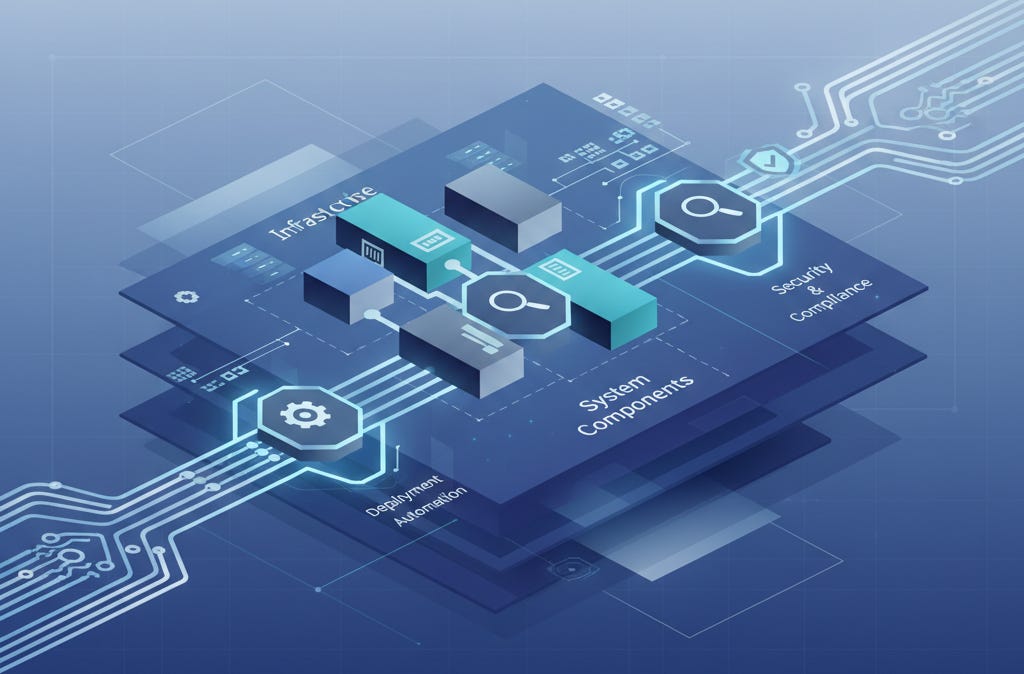
Building a software factory isn’t just about connecting AI tools to deployment pipelines. Based on what’s working at Stripe and emerging patterns across the industry, here are the essential components:
Artifact Response Systems
Your factory needs to respond to structured specifications and generate complete deployments. At Duetto, this might mean taking an APEX specification for a new revenue optimization feature and producing:
Kubernetes deployment configurations
Database migration scripts
Monitoring and alerting setup
Load testing scenarios
Documentation
The system should handle the entire deployment lifecycle from specification to running production service, not just generate code that someone has to manually deploy.
Strategic Human Review Checkpoints
Notice I said strategic, not comprehensive. Stripe’s fire-and-forget model works because they’ve identified the specific points where human judgment adds value without blocking automation.
For enterprise applications, you need checkpoints at:
Specification validation: Do the requirements make business sense?
Security review: Are access patterns and data handling appropriate?
Integration testing: Does this work with existing systems?
Production readiness: Are monitoring and rollback capabilities sufficient?
The key is making these gates fast and decisive, not bureaucratic approval processes that defeat the purpose of automation.
Scaffolding for Error Detection
Your factory will produce broken code. That’s not a bug—that’s reality. The difference between a prototype and a production system is sophisticated error detection and recovery.
This means:
Isolated execution environments where failures can’t cause broader damage
Automated testing and iteration when initial attempts fail
Multi-layer validation before anything reaches production
Comprehensive rollback capabilities for when something gets through anyway
Stripe’s sandbox architecture is brilliant because it lets agents fail safely while learning from those failures to improve future attempts.
Success Criteria Parameters
Your factory needs to know what success looks like for each type of work. Not just “the code compiles,” but measurable business outcomes.
For a hospitality feature, success might mean:
Performance benchmarks met under load
Integration tests pass with five different PMS systems
Revenue impact measurable within 30 days
Zero customer-facing errors in the first week
Define these criteria upfront, build them into your validation pipeline, and let the factory optimize for actual business value rather than technical metrics alone.
Cost Tracking and Optimization
AI-powered development isn’t free. You need visibility into the computational costs, tool usage, and human review time for each generated system.
Stripe optimizes for this explicitly—their one-shot agents cost less than conversational approaches, their surgical tool selection reduces context costs, their automated testing prevents expensive human debugging cycles.
Track these metrics from day one. The difference between a cost-effective software factory and an expensive experiment is usually found in the operational details.
Deployment Models
Your factory needs sophisticated understanding of how to deploy different types of applications. Golden Path workflows that codify best practices, environment promotion strategies that reduce risk, and rollback procedures that restore service quickly when things go wrong.
This is where domain expertise becomes critical. A generic software factory might know how to deploy a web service, but does it understand the specific requirements for hospitality payment processing, guest data privacy, and integration with property management systems?
The Duetto Context
At Duetto, we’re thinking about how a software factory could handle the complexity of hospitality technology. Our domain has unique challenges:
Data Integration Complexity: Every hotel uses different systems with different data formats. A software factory needs to understand these variations and generate appropriate integration code.
Regulatory Requirements: Guest privacy, payment processing, accessibility compliance. The factory needs to embed these requirements into everything it produces.
Performance Characteristics: Revenue management systems need to process pricing updates in near real-time across thousands of rooms and rate plans. The factory needs to optimize for these specific performance patterns.
Operational Constraints: Hotels can’t afford downtime during peak booking periods. Deployment strategies need to account for hospitality business cycles.
We’re not trying to build a general-purpose software factory. We’re exploring how to build one that deeply understands our domain and can produce applications that work reliably in hospitality environments.
The Reality Check
Building a software factory is hard. Not because the technology doesn’t exist—Stripe proves it does—but because the organizational challenges are substantial.
ROI Demonstration: You need to show measurable productivity improvements and cost savings. “The AI is impressive” isn’t sufficient justification for the investment required.
Security and Compliance: Automated code generation that touches customer data or payment systems requires additional security layers and audit capabilities.
Developer Workflow Changes: Your engineering team needs to learn new ways of working. Some will embrace it, others will resist. Change management is as important as the technical implementation.
Quality Assurance Evolution: Your QA processes need to evolve from testing human-written code to validating AI-generated systems. Different failure modes, different testing strategies.
Integration Complexity: Your factory needs to work with existing systems, databases, APIs, and workflows. The harder the integration challenge, the longer the implementation timeline.
These aren’t reasons to avoid building a software factory. They’re reasons to approach the project with realistic expectations and proper preparation.
Looking Forward
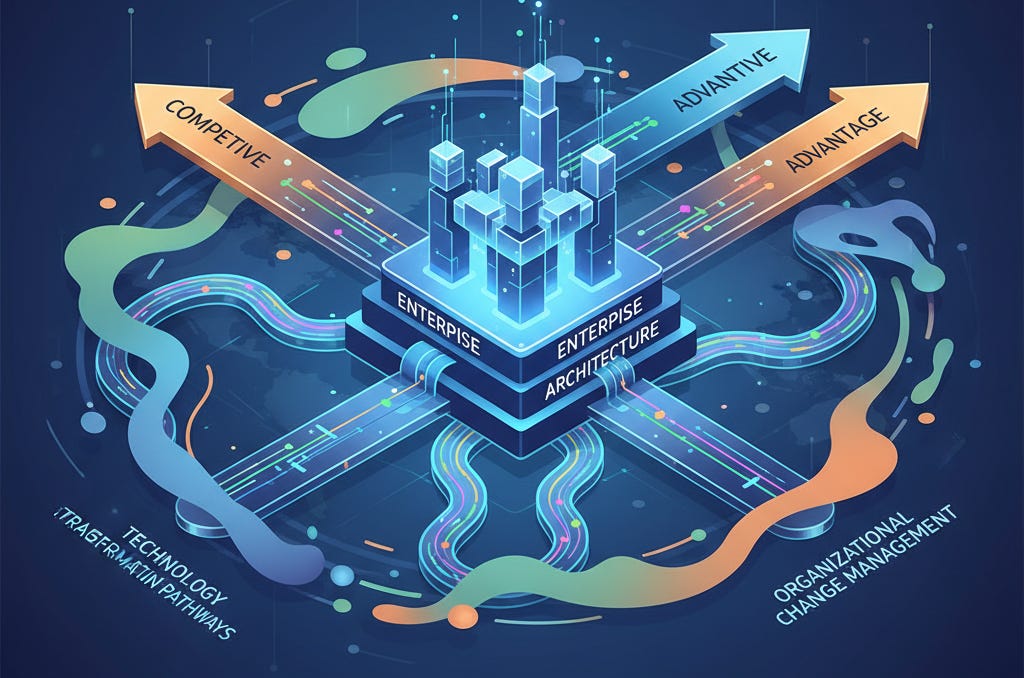
The trajectory is clear. Software factories are moving from experimental to mainstream, with proven systems operating at enterprise scale and standardized architecture patterns emerging across the industry.
The question for engineering leaders isn’t whether this transformation will happen. It’s whether your organization will be an early adopter that shapes how software factories work in your domain, or a later adopter that implements patterns developed by others.
At Duetto, we’re betting on being early. Not because we want to be on the cutting edge for its own sake, but because the companies that figure out domain-specific software factories first will have a significant competitive advantage in application development speed and quality.
The software factory represents the next evolution of platform engineering. The organizations that master it will build better software faster than those that don’t.
The challenge isn’t technical anymore. It’s organizational, strategic, and operational.
The question is: Are you ready to build one?
About this analysis: This piece draws from comprehensive research on production software factory implementations, including detailed analysis of Stripe’s Minions architecture, enterprise platform engineering initiatives, and emerging open source solutions. The author is exploring software factory applications for hospitality technology at Duetto.
About the author: Bob Matsuoka is Chief Technology Officer at Duetto and creator of Claude MPM (Multi-agent Project Manager). He has implemented AI-assisted development workflows across enterprise engineering teams and writes about the practical realities of AI integration in software development at HyperDev.