


One year ago, “50 First Dates with Claude Code“ took me several hours to write with Joanie’s help in Google Docs. This morning, I drafted two comprehensive Anthropic articles using claude-mpm agents in 45 minutes - research, generation, editing, the works.
That evolution mirrors exactly what happened across the entire AI coding industry this year (and the ascension of Claude Code, which was released shortly before I began my journey). I wasn’t just writing about the transformation. I was living it.
The Journey: From Accident to Infrastructure
HyperDev started by accident. In March 2025, I posted a LinkedIn experiment about spending 12 hours building a travel planning app with AI tools. I was a technology executive who “hadn’t coded seriously in 20 years” testing whether the productivity claims were real or hype.
The response was immediate and intense. Richard Wang left a prescient comment: “’AI allows a non-engineer to build a product without coding’ is hype... ‘AI can improve a developer’s productivity by 10x’ is true.” That experiment generated 4,000 lines of AI code in a single session and launched what became 168 articles over nine months.
April through June was chaos. I built claude-multiagent-pm, a prototype that worked well enough to be exciting and poorly enough to be frustrating. Token costs were obscene - every subprocess inherited the entire conversation context. I shipped 44 repositories. Probably a third represent false starts or abandoned approaches.
But that’s what I was learning: what not to build. Which constraints matter. Where the sharp edges live. The breakthrough insight from this period: Infrastructure beats features. The tools that demo well (flashy autocomplete, pretty interfaces) weren’t the ones that sustained daily use. The protocols, memory systems, and context management layers were what made sustained multi-agent work possible.
The Breakthrough: When Everything Changed
Mid-July 2025, Claude Code shipped context filtering. Sounds like a minor technical detail. It changed everything.
Before: my prototype burned tokens like a furnace and required constant babysitting.
After: I rebuilt everything. claude-mpm emerged with 1,545 commits over the rest of the year.
I remember the specific moment it hit me: I’d just pushed a feature that I would never have taken on without a team. Four hours of engaged time, a few days of agentic time. Twenty years away from serious coding. Four months back. Contributing production code for paying clients.
The tools weren’t just making me more productive. They were making me more ambitious. I was taking on problems that required sustained, complex thinking because I had AI teammates that could handle the execution details while I focused on architecture and strategy.
This is when my perspective shifted from “AI coding tools are interesting” to “AI coding tools are transformative.” Not because they eliminated the need for programming knowledge, but because they amplified existing knowledge into production-quality artifacts.
The writing and building formed a virtuous cycle. I documented what I learned building tools. The documentation attracted practitioners who used the tools. Their feedback improved the tools. claude-mpm gained 30+ stars and daily use across six months of client work. These weren’t GitHub tourism projects - they were tools that other practitioners adopted because they solved real problems I’d discovered through real use.
The Evidence: Predictions and Numbers
Looking back through a year of articles, my prediction accuracy was surprisingly good.
What I got right:
Multi-agent orchestration would prove superior to monolithic assistants (claude-mpm’s adoption validated this)
Infrastructure over features as the determining factor for tool longevity (memory systems outlasted flashy demos)
CLI-agentic coding going mainstream (Claude Code’s 46% “most loved” rating proved the thesis)
Pricing correction timing (18-24 months from October 2025 - signals are clear at six months)
What surprised even me:
Speed of Claude Code’s dominance (faster than even advocates expected)
Writing-building credibility loop (thought leadership through shipping, not just analysis)
The quantified impact tells its own story:
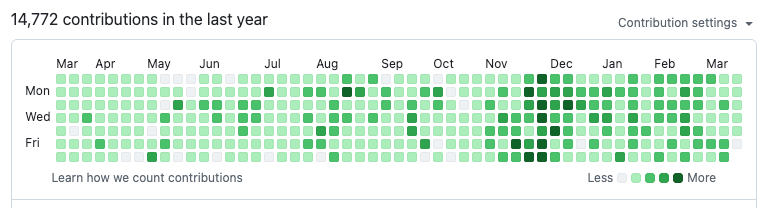
4,919 commits in nine months of sustained development
69.7 billion tokens processed across all tools and projects
198 articles published (3.2/week sustained)
547 production deployments across client and personal projects
$45,000 in AI compute at rack rates (subsidized to $8,000)
But the qualitative transformation matters more. I evolved from asking “Is this real?” to asking “How do we scale this organizationally?”
The Transformation: From Observer to Practitioner to Leader
The most significant development was personal: in January 2026, I joined Duetto as CTO.
This wasn’t a career change - it was an expansion. Twenty-five years of technology leadership combined with eight months of hands-on AI development created a unique perspective. I wasn’t returning to technology leadership despite the AI work. I was taking the role because of it.
What changed wasn’t my capabilities - I’ve been leading technology teams for decades. What changed was having AI as a force multiplier that converted that knowledge into actual artifacts. I could prototype entire systems, validate approaches, and demonstrate concepts that previously would have required dedicated engineering resources.
The leadership experience informed architectural decisions. The practitioner activity created credibility. The writing documented both. Now I get to test everything I’ve been writing about at enterprise scale.
The Reality Check: Both/And, Not Either/Or
October 2025, I published “Is AI A Bubble? I Didn’t Think So Until I Heard Of SDD.” The piece synthesized something I’d been wrestling with: how can genuine transformation and bubble dynamics exist simultaneously?
The answer: they can. And do.
The AI coding revolution is real. The bubble dynamics are also real. Codeium at 70x ARR multiples (vs dot-com peak of 18x) while providing genuine value to practitioners. My $45,000 in AI compute costs exemplified both the unsustainable economics and the genuine value creation. The 82% subsidy rate can’t last, but the ROI still works at full rates for sustained professional use.
Companies with product-market fit and operational discipline will survive the correction. Those burning capital on “technical potential” without user adoption won’t. The technology remains transformative even if the valuations prove unsustainable.
What’s Next: From Individual Productivity to Organizational Transformation
The industry is transitioning from individual productivity tools to enterprise transformation frameworks. The early adopters who mastered AI-assisted development workflows now face a different challenge: scaling those practices across entire engineering organizations.
The questions have evolved:
Year 1: “Can AI tools make me more productive?”
Year 2: “How do we maintain code quality and security with AI-generated code?”
Year 3: “How do we transform hiring, onboarding, and career development when AI changes what programming means?”
At Duetto, I’m working on these questions at scale. How do you migrate an enterprise engineering team from traditional development practices to AI-assisted workflows while maintaining operational excellence? How do you balance productivity gains with governance requirements? How do you rethink technical leadership when junior developers can ship senior-quality code with AI assistance?
These are the infrastructure problems that matter now. Not the tools themselves, but the organizational systems that make the tools effective at scale.
The Retrospective: What One Year Taught Me
HyperDev became valuable because it documented the transformation in real-time, from the perspective of someone living it. Not retrospective analysis of what happened, but contemporary documentation of what was happening.
The key insights:
Timing matters. Starting documentation right at the inflection point captured both the chaos and the consolidation. Personal journey paralleled industry maturation.
Practitioner perspective beats observer perspective. Direct experience with the tools, including their limitations and sharp edges, generated insights that pure analysis couldn’t match.
Building creates credibility. Shipping tools that other practitioners adopt generates more authority than analytical commentary alone.
Writing and building amplify each other. Documentation of practice creates thought leadership. Thought leadership creates opportunities. Opportunities create more practice to document.
One year ago, I was asking whether AI coding tools were genuinely transformative or just sophisticated autocomplete. The answer: they’re genuinely transformative, but in ways that none of us fully anticipated. The transformation wasn’t about eliminating the need for programming knowledge. It was about amplifying existing knowledge into production-quality artifacts faster than previously possible.
Most importantly, the transformation was about enabling individual practitioners to think and build at organizational scale. That’s what I experienced personally. That’s what I documented in nearly 200 articles. And that’s what I’m now implementing at enterprise scale.
HyperDev year one was about learning what was possible. Year two is about making it practical. Year three might be about making it inevitable.
The tools keep getting better. The workflows keep evolving. The organizational challenges keep getting more complex.
And I’m still here, still building, still documenting, now leading, still learning.
What a year it’s been. What a year it’s going to be.
HyperDev documents the real-world application of AI development tools by practitioners building production systems. For technical deep dives and business analysis of the tools behind this transformation, look for upcoming coverage of Claude Code’s competitive dominance.