

On March 31, 2026, Anthropic accidentally shipped their entire Claude Code source—512,000 lines of TypeScript—in an npm package. What followed was perhaps the most intense technical autopsy in AI history. The verdict? Mixed, and revealing.
The criticism has been swift and pointed. A 5,594-line file with a single 3,167-line function sporting 12 levels of nesting. Regex-based frustration detection looking for “wtf” and “shit”. A quarter million wasted API calls per day from a three-line bug. As one critic put it: “A multi-billion-dollar AI company is detecting user frustration with a regex.”
But before we pile on, we need to ask: What does “good code” even mean when you’re building client-side LLM applications?
The Unprecedented Challenge
Claude Code isn’t your typical software. It’s a client-side application that orchestrates conversations with large language models, manages context across sessions, and attempts to maintain coherent state while working with fundamentally non-deterministic systems.
This creates problems that traditional software engineering practices weren’t designed for:
Context management: Handling arbitrarily long conversations that exceed model limits
Failure recovery: When your core computation is a 20% failure-rate API call
State synchronization: Keeping UI, conversation history, and model context aligned
Dynamic adaptation: Code that needs to adapt to changing model capabilities
The leaked source reveals sophisticated solutions to these problems: a three-layer memory architecture, anti-distillation mechanisms, dual parser systems for safety. The engineering is genuinely impressive, even if the implementation is sometimes ugly.
The Meta-Problem: AI Writing AI
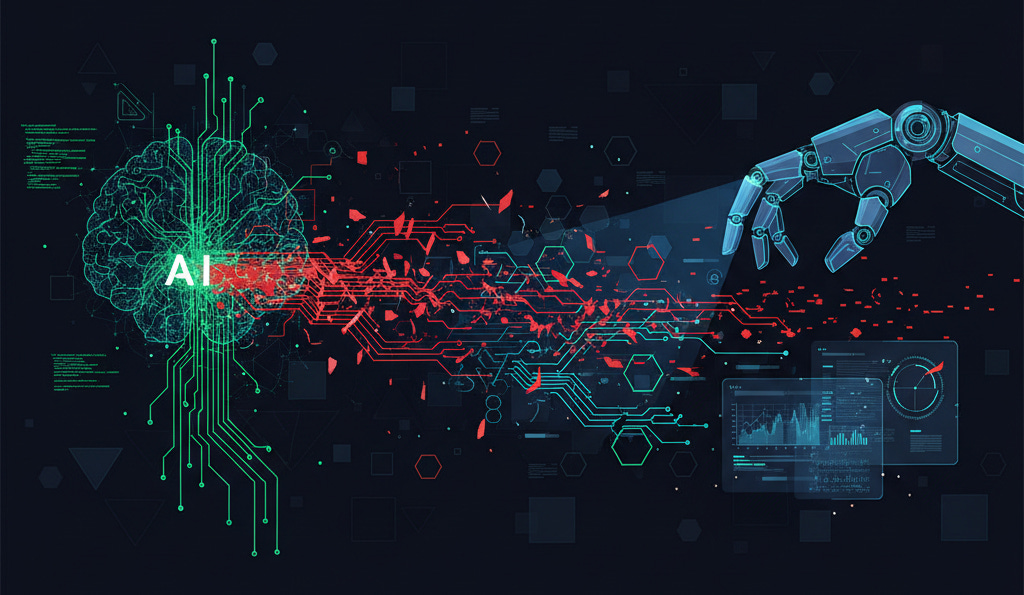
Claude Code was partially written by Claude Code. This represents the first documented case of a large-scale AI tool generating significant portions of its own source code—not just incremental improvement, but a categorical change in development methodology that creates unprecedented quality control challenges when AI-generated code scales beyond human review capacity.
When AI generates code at scales that exceed human review capacity, traditional quality control breaks down. That 3,167-line function? Probably not written by a human. The 12 levels of nesting? Algorithmic patterns, not human design choices.
This is the real story: We’re witnessing the first major autopsy of self-bootstrapping AI tooling.
Deterministic vs. LLM Code: Different Standards Apply
I’ve been thinking about this distinction a lot lately in my work with Claude MPM, an open-source multi-agent code generation framework built on Claude Code that coordinates specialized AI agents for software development workflows. When you’re building traditional, deterministic software, all the usual rules apply. Clean functions, clear abstractions, maintainable architecture. Use your normal code analysis tools.
But when you’re building LLM-integrated systems, the rules change:
Failure is the default: Your core operations fail 20% of the time
Context is expensive: Every token counts toward limits
Behavior is emergent: The system does things you didn’t explicitly program
Adaptation is constant: Model capabilities change monthly
In this world, a 5,594-line file might be ugly, but if it successfully manages complex failure recovery across multiple conversation threads, it might also be correct.
The Code Analysis Checkpoint Strategy
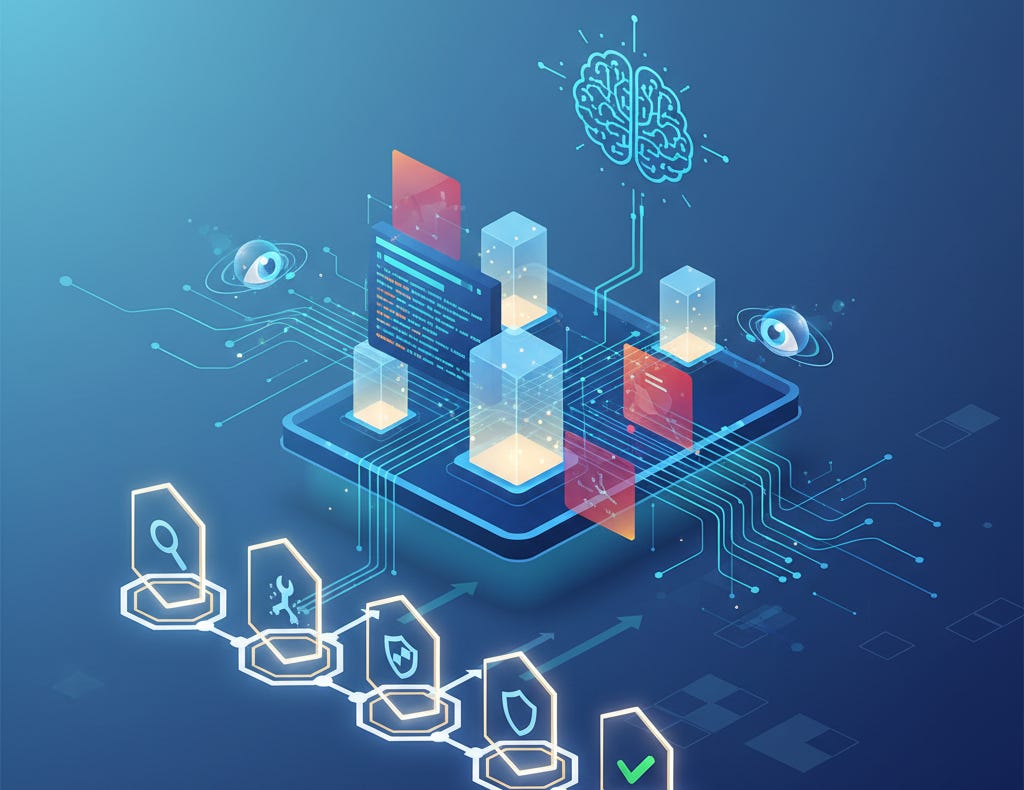
This is where I’ve found success with my recent updates to the code analyzer in Claude MPM. The analyzer utilizes mcp-vector-search for comprehensive codebase analysis, providing AST-based semantic search, full-text search capabilities, and knowledge graph construction for architectural pattern detection. Instead of trying to prevent AI from generating messy code (impossible), I focus on regular refactoring and analysis checkpoints.
The analyzer has gotten very good at catching two specific issues:
Drift: When AI-generated code slowly diverges from intended architecture
Bloat: When generated solutions become unnecessarily complex over time
I make a point to run these checkpoints regularly, treating them as essential maintenance rather than optional cleanup. It’s like running cargo clippy or eslint, but for AI-generated architectural decisions.
The key insight: AI code needs different kinds of maintenance than human code.
Outcome-Based Generation: Does It Work?
Here’s my perhaps controversial take: If Claude Code successfully helps developers ship better software faster, then the messy internals might not matter as much as we think.
The leaked code reveals a system that:
Handles millions of conversations per day
Maintains context across arbitrarily long sessions
Provides sophisticated memory management
Implements multiple safety layers
Delivers a $2.5 billion ARR product experience
Is the implementation elegant? No. Does it work? Apparently, yes. Because we can observe/measure what it’s building completely independently of what built it.
This doesn’t excuse basic engineering failures (that .npmignore mistake was embarrassing). But it does suggest we need new frameworks for evaluating AI-generated systems.
The Scaffolding Solution
Rather than trying to make AI generate perfect code, we can scaffold around the inevitable messiness:
Automated refactoring checkpoints: Regular cleanup of AI-generated bloat
Architectural constraints: Guard rails that prevent the worst patterns
Outcome validation: Testing that focuses on behavior over implementation
Human oversight: Strategic points where humans validate AI decisions
This is the approach I’ve been taking with Claude MPM, and it’s proven remarkably effective. Let the AI generate messy-but-functional code, then use tooling to clean it up systematically.
What This Means for the Industry
The Claude Code leak represents a watershed moment. It’s our first real look at what happens when AI tools build themselves at scale.
The criticism is valid—basic engineering discipline matters, even in AI systems. A missing .npmignore file is inexcusable for a billion-dollar product.
But the deeper question is whether we’re applying the right standards. Traditional code quality metrics may not capture what actually matters for AI-integrated systems.
Moving Forward
Anthropic probably is moving too quickly in some ways. The leak revealed security vulnerabilities, competitive intelligence losses, and quality control failures that suggest inadequate human oversight.
But they’re also pioneering entirely new categories of software. The problems they’re solving—context management, failure recovery, human-AI collaboration—don’t have established best practices yet.
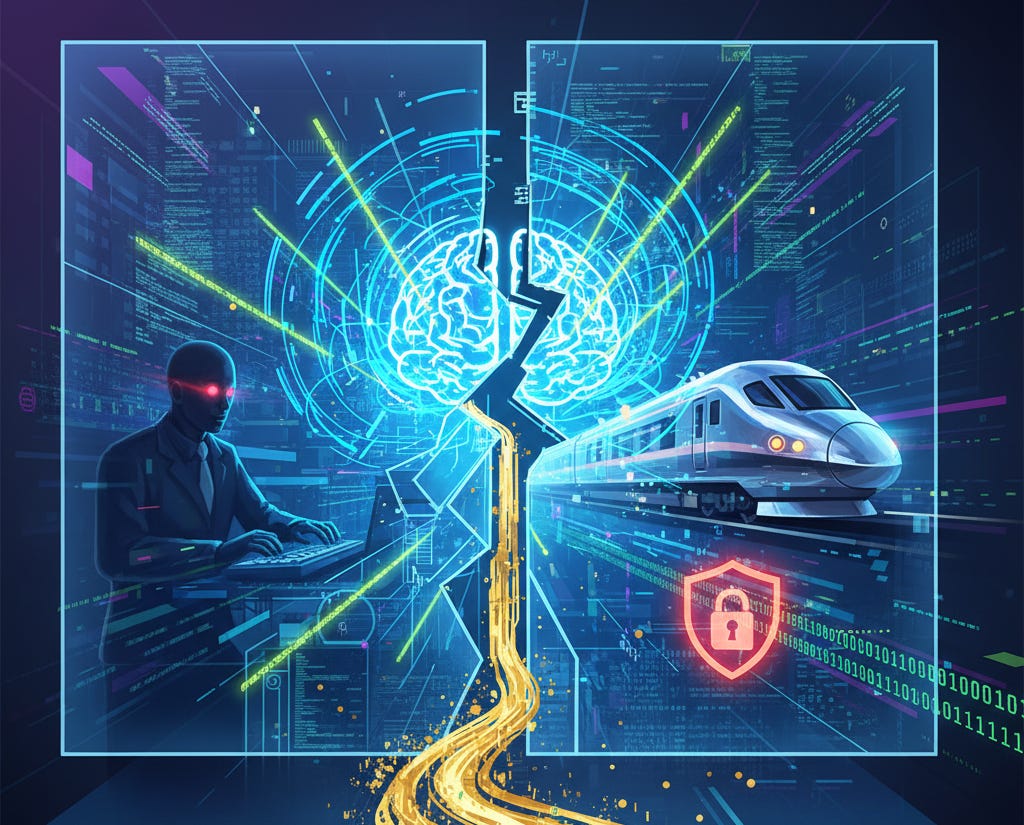
The real lesson isn’t that AI-generated code is inherently bad. It’s that we need new practices for building, reviewing, and maintaining systems that exceed human comprehension scales.
The question isn’t whether Claude Code’s internals are messy. It’s whether we can build better scaffolding around AI-generated systems to catch the problems that matter while accepting the messiness we can’t avoid.
The Claude Code team probably needs to slow down on the basics—security, testing, deployment hygiene. But they’re moving fast on problems that genuinely require speed to solve before competitors do.
That’s a nuanced position in an industry that loves simple takes. But nuance is what the moment requires.
What do you think? Are we being too hard on AI-generated code, or not hard enough? Share your thoughts in the comments.
About this analysis: This piece draws from extensive technical analysis of the March 31, 2026 Claude Code source leak, including community responses, security assessments, and business impact analysis. The author maintains active development projects using AI-assisted coding tools and has direct experience with the challenges discussed.
About the author: Bob Matsuoka is Chief Technology Officer at Duetto and creator of Claude MPM (Multi-agent Project Manager). He has implemented AI-assisted development workflows across enterprise engineering teams and writes about the practical realities of AI integration in software development at HyperDev.